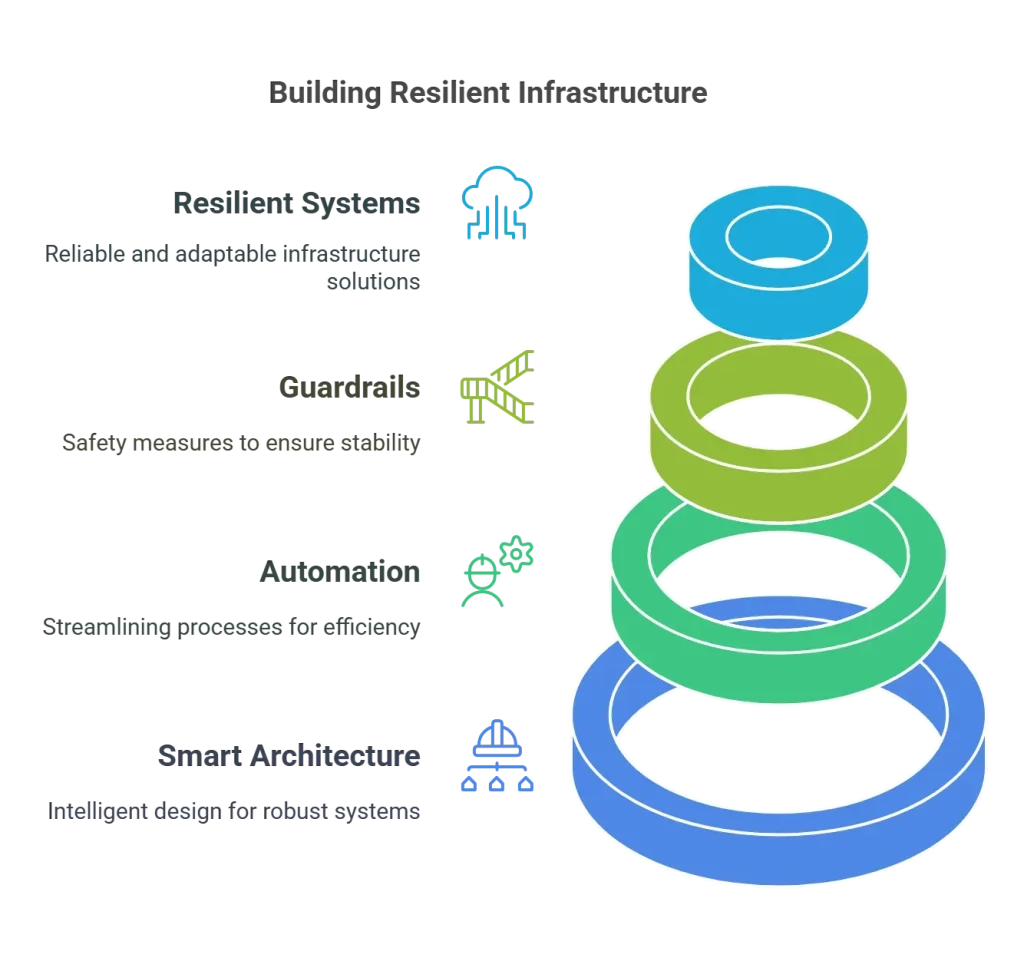
Building Resilient IT Systems is no longer a luxury for modern organizations; it’s a strategic necessity. As digital services power customer experience, operational efficiency, and revenue, downtime or data loss can cascade into reputational damage, regulatory penalties, and missed opportunities. A holistic approach blends resilience concepts with robust architecture to protect data and maintain service continuity. This framing emphasizes building redundancy, clear incident playbooks, and data protection across platforms. By aligning people, processes, and technology, you can create resilient operations that endure pressure and adapt to evolving workloads.
From another angle, organizations pursue continuity engineering, redundancy, and proactive risk management to keep services resilient. IT resilience strategies provide a framework for setting measurable targets for uptime and performance. Disaster recovery planning remains central, guiding how backups, failover, and data replication restore operations after an outage. A cloud design that prioritizes security and governance supports hybrid and multi-cloud environments. Ultimately, these elements create a resilient IT landscape that enables rapid recovery and continuous service delivery.
Building Resilient IT Systems: Core Principles for IT Resilience Strategies
In today’s digital economy, Building Resilient IT Systems is not optional; it anchors customer experience, uptime, and regulatory compliance. A robust set of IT resilience strategies blends architecture, governance, and operational discipline to anticipate failures and minimize impact. Organizations should design for failure by partitioning systems into independent components, enabling targeted failover and avoiding single points of failure.
This approach covers hardware, software, networks, and cloud services, and it emphasizes the alignment of people, processes, and technology. Establish measurable goals such as SLOs and runbooks, invest in observability, and practice game days to prove readiness. By formalizing design patterns and recovery paths, teams can preserve essential functions even during disruptive events.
Cloud Resilience as a Catalyst for Continuous Availability
Cloud resilience unlocks scalability and global reach, but only when paired with deliberate design. Use multi-cloud or hybrid configurations to diversify risk, and deploy geographic redundancy to protect against region outages. Leverage auto-scaling, managed services with high availability, and event-driven architectures to absorb traffic spikes without compromising services.
Regular DR tests and cloud-native disaster recovery strategies validate recovery procedures and performance targets. Maintain a governance model that enforces secure cloud architecture and automated compliance checks, while preserving control over data sovereignty and cost. Together, these cloud resilience practices enable a systems-of-systems approach that sustains uptime and accelerates recovery.
Secure Cloud Architecture: Designing Security-Driven Resilience
Security is inseparable from resilience; a breach or misconfiguration can cripple availability as surely as a hardware fault. Secure cloud architecture embeds identity, access controls, encryption, and threat detection into the design, reducing attacker blast radius and enabling safer recovery. By default, apply least-privilege access, MFA, and continuous risk assessment to harden the stack.
Regular vulnerability management, secure software development lifecycle practices, and drift detection help maintain a trusted baseline. Ensure encrypted data at rest and in transit, robust key management, and secure backups that support rapid restoration after incidents. Security-by-design underpins rapid, confident recovery and long-term trust.
Disaster Recovery Planning for Rapid Recovery and Continuity
Disaster recovery planning translates resilience into practiced capability. Define RPO and RTO targets that reflect business needs, then design architectures that meet those thresholds with data protection, replication, and durable backups. This planning sets the foundation for resilient operations and predictable recovery timelines.
Automated runbooks, tested restore procedures, and regular drills turn plans into performance. Use automation to reduce human error during high-stress incidents and document learnings in post-mortems that feed back into improving disaster recovery planning and overall resilience.
Resilient IT Architecture: Patterns, Observability, and SRE
A resilient IT architecture uses modular, loosely coupled components, idempotent operations, and graceful degradation to isolate failures and maintain critical services. Implement SRE practices with service-level objectives (SLOs) and error budgets to balance velocity with reliability, and run regular game days to validate recovery.
End-to-end observability – tracing, metrics, and logs – reduces MTTR and helps pinpoint root causes. Map critical business processes to technical components, ensure redundancy and auto-remediation, and establish a culture of continuous improvement that aligns with IT resilience strategies and business goals.
People, Processes, and Governance: Building a Culture of Resilience
People and governance power resilience; without a culture that prioritizes availability, security, and continuity, even strong technology can fail. Define roles, responsibilities, and escalation paths; invest in training, tabletop exercises, and post-incident reviews to institutionalize learning and accountability.
Corporate governance and compliance harmonize resilience efforts with regulatory requirements and data-handling rules while preserving operational agility. Regularly review DR tests, security posture, and change management to sustain improvements in IT resilience strategies and ensure resilient IT architecture remains aligned with business needs.
Frequently Asked Questions
What is Building Resilient IT Systems and why is it essential for modern organizations?
Building Resilient IT Systems is a holistic, ongoing capability that prioritizes availability, integrity, and continuity across technology, cloud, and security. It aligns with IT resilience strategies to anticipate failures, automate recovery, and continuously improve incident response, ensuring services stay available even under stress.
How does cloud resilience fit into Building Resilient IT Systems?
Cloud resilience enhances Building Resilient IT Systems by enabling geographic redundancy, auto-scaling, and cloud-native disaster recovery. Use multi-cloud or hybrid configurations, data replication, and a secure cloud architecture to maintain uptime during outages and quickly recover from failures.
What role does disaster recovery planning play in Building Resilient IT Systems?
Disaster recovery planning defines RPO and RTO targets, backup strategies, and tested recovery procedures. As part of Building Resilient IT Systems, DR planning translates resilience into action with clear runbooks, automation, and regular drills to minimize downtime.
How can secure cloud architecture reinforce Building Resilient IT Systems?
Secure cloud architecture embeds security controls from the start—least-privilege access, encryption at rest and in transit, identity management, and automated compliance checks—strengthening data protection and enabling safer, more reliable operations within Building Resilient IT Systems.
What are the core principles of a resilient IT architecture within Building Resilient IT Systems?
Key principles include modular design, redundancy and fault tolerance, idempotent operations, end-to-end observability, and reliability engineering (SRE) practices. Together they enable isolation of failures, graceful degradation, and rapid recovery in a resilient IT architecture.
How should organizations measure and continuously improve Building Resilient IT Systems?
Measure MTTR, MTBF, availability, and adherence to RTO/RPO targets; track change failure rates and conduct blameless post-mortems. Regular chaos engineering, DR drills, and resilience-focused IT resilience strategies drive ongoing improvement.
| Topic | Key Points |
|---|---|
| Understanding the resilience mindset | Resilience mindset: anticipate failures, automate recovery, and continuous improvement. It’s an ongoing capability across hardware, software, networks, cloud, and security. Prioritize availability, integrity, and continuity with measurable goals, clear roles, and regular testing. |
| Technology choices that reinforce resilience | Modular, loosely coupled design; redundancy and fault tolerance across availability zones/regions; idempotent and retry-friendly operations; end-to-end observability; SRE practices with SLOs and error budgets; map critical business processes to technical components; design testable recovery paths; use redundant storage, database replicas, and stateless tiers. |
| Cloud as a catalyst for resilience | Multi-cloud/hybrid configurations; geographic redundancy across regions; auto-scaling and resilient managed services; cloud-native disaster recovery with regular tests; security-by-design with least-privilege access, encryption, and automated compliance. |
| Security as a resilience enabler | Zero Trust and strong identity management; encryption and data protection; secure software development lifecycle; configuration hygiene and drift detection; incident response readiness with playbooks and regular exercises. |
| Disaster recovery and business continuity planning | Define RPO/RTO targets; implement frequent backups and immutable storage; clear runbooks and automation; regular DR testing; prioritize critical paths and recovery sequences. |
| People, processes, and governance | Foster a resilience culture; define roles and responsibilities; maintain runbooks and playbooks; provide training and exercises; align with governance and compliance requirements. |
| Measuring and improving resilience | Track MTTR, MTBF, and availability; monitor RTO/RPO adherence; measure change failure rate; conduct blameless incident post-mortems; assess customer impact to align resilience with business goals. |
| A practical blueprint for organizations | Start with a resilience assessment; set concrete SLOs/RPOs/RTOs; architect for resilience with modular components and security-by-design; build an automation stack; test regularly (chaos, DR drills, security tabletop); cultivate a culture of resilience. |
Summary
Table above summarizes the key points from the base content about Building Resilient IT Systems.